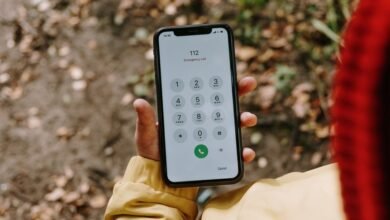
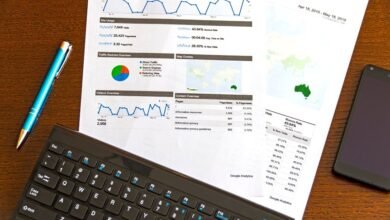
Unknown Contact Search Database and Caller Analysis: 685105011, 665715255, 933930429, 911087021, 605713742, 683785843, 955003268, 983216922, 630300080 & 936760510

Unknown contact search databases synthesize limited data points to infer caller context. They map regional allocation, carrier routing, and activity rhythms, forming contextual risk fingerprints. Each number listed—from 605713742 to 936760510—is weighed for origin, usage patterns, and behavioral cues, while prioritizing privacy and minimization. The approach remains cautious, balancing legitimate inquiry with autonomy. A careful path forward emerges, yet unresolved ambiguities persist, prompting consideration of what safeguards and next steps should govern such analyses.
What Unknown Contact Search Databases Do for Caller Insight
Unknown contact search databases aggregate publicly available and specialized data to reveal contextual clues about unknown callers. They compile traces, networks, and behavioral signals to produce actionable profiles without exposing sensitive sources. Unknown origin insights emerge from cross-referenced patterns, while data signature mapping translates numeric traces into identifiable metadata. This framework supports discreet assessment and strategic decision-making within privacy-conscious investigative workflows.
How Individual Phone Numbers Reveal Patterns and Origins
Individual phone numbers act as compact traces, carrying patterns that reflect origin, usage, and behavioral context. They present discrete signals about regional allocation, carrier routing, and activity rhythms. Analysts interpret these signals to map patterns origins, uncover routine intervals, and distinguish genuine from anomalous behavior. Signal interpretation remains central, guiding inference while acknowledging cross-border routing and shared device usage complexities.
Privacy, Ethics, and Practical Limits in Identity Resolution
Privacy, ethics, and practical limits shape the discipline of identity resolution by constraining what data can be collected, how it is analyzed, and the purposes for which it is used.
This framework acknowledges privacy concerns, consent implications, ethics, and data minimization as guardrails, guiding method selection, risk assessment, and accountability while preserving legitimate interests and individual autonomy within lawful boundaries.
Applying Caller Analysis: From Signals to Risk Assessment and Next Steps
Analyzing caller signals entails a structured translation from raw data to actionable risk indicators, with each attribute—caller metadata, behavioral patterns, and content cues—contributing to a calibrated risk score.
The unknown caller’s risk assessment hinges on caller origins, identity resolution, and contextual signals, guiding next steps while preserving confidentiality and offering freedom through precise, objective evaluation.
Frequently Asked Questions
How Accurate Are Unknown Contact Results Across Different Databases?
Unknown results vary; Cross database discrepancies exist, and Accuracy vs. coverage trade-offs emerge. The evaluation shows moderate consistency in core identifiers, but divergent auxiliary data, requiring cautious interpretation and independent verification to maintain confident access.
Can Caller Analysis Reveal Sensitive Personal Traits?
Caller analysis can reveal sensitive traits, but often indirectly; such inferences raise privacy risks, prompting safeguards. The balance between transparency and civil liberties remains pivotal, demanding careful governance to protect individuals while enabling legitimate insights.
What Tools Secure Data Used in Identity Resolution?
Identity resolution tools employ robust encryption, access controls, and audit trails to safeguard unknown contact search database safety. They rely on privacy-preserving matching, data minimization, and secure sandboxing, enabling confidential, compliant, and freedom-friendly data handling.
Do Numbers Indicate Legitimate Business or Scam Patterns?
Numbers alone cannot prove legitimacy; patterns may indicate scams or legitimate outreach. Concerned users rely on data governance to assess risk, cross-check sources, and apply prudent verification while preserving autonomy and privacy.
How Often Are Databases Updated for New Numbers?
Databases update at varying intervals, with updating cadence balancing speed and accuracy. Data freshness depends on source feeds and verification processes, aiming for timely yet reliable entries; users value transparent, confidential handling amid evolving regulatory constraints.
Conclusion
In a quiet forest, a watchful owl reads the wind-tossed leaves for signs of travelers, never naming them. The trees murmur patterns of paths and seasons, suggesting origin and intent without exposing individuals. The caretaker notes rhythms and routes, weighing risk with restraint. When dawn nears, permission and prudence guide every step, ensuring help remains lawful and discreet. The forest remains safe, its secrets kept, its stories guiding careful next steps rather than bold claims.