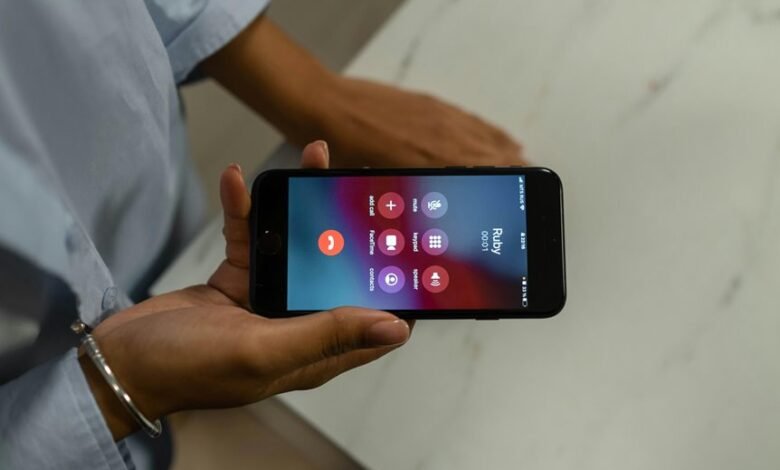
Verified Caller Intelligence, as framed by a Contact Matrix, integrates provenance, reliability history, and interaction context to assess legitimacy and risk. The approach emphasizes transparency, cross-source correlation, and contextual cues such as timing and cadence, while avoiding dependence on a single signal. It seeks auditable, consent-driven workflows that balance safety with autonomy. The methodology invites scrutiny of data sources and decisions, and its practical implications hinge on implementation choices that invite ongoing examination.
What Is Verified Caller Intelligence and Why It Matters
Verified caller intelligence refers to the systematic collection and analysis of caller identity and behavior data to assess the legitimacy and risk of incoming communications.
The approach evaluates patterns, trust cues, and anomalies without bias.
It favors transparency and accountability, enabling informed decisions.
Key concepts include verified caller and data signals, guiding risk assessment while respecting privacy and freedom of choice.
Data Signals Behind Caller Verification
Data signals underpinning caller verification encompass measurable indicators drawn from both source credibility and interaction context. These signals are evaluated systematically to infer authenticity, reducing uncertainty without overreliance on any single factor.
Data signals include provenance, reliability history, and consistency across communications, while caller verification weighs contextual cues such as timing, cadence, and response patterns.
How to Use Contact Matrix for Safer Calling
How can organizations harness the Contact Matrix to reduce risk during calls without compromising efficiency? The framework enables structured verification of a verified caller by correlating data signals from multiple sources. Analysts assess call context, cross-check identifiers, and flag anomalies promptly. Implementations emphasize reproducibility, minimal friction, and traceable decisions to protect users while preserving operational agility.
Privacy, Ethics, and Best Practices for Responsible Use
As organizations expand the use of Contact Matrix to verify caller identity and context, careful attention to privacy, ethics, and governance becomes indispensable.
The analysis emphasizes transparent data handling, auditable processes, and consent-driven workflows, ensuring accountability without stifling innovation.
While pursuing robust caller verification, practitioners must balance risk, autonomy, and public trust, aligning practice with privacy ethics and lawful, responsible deployment.
Conclusion
In sum, the Contact Matrix assembles diverse signals to evaluate call legitimacy with controlled, auditable rigor. The method’s strength lies in cross-source corroboration and contextual timing, reducing single-factor bias. Yet uncertainty remains: signals may conflict, histories may be incomplete, and adversaries adapt. Until verification standards are universally adopted and transparent, the system’s verdicts should be treated as probabilistic guidance rather than absolute truth. The next alert could reshape confidence, revealing a hidden pattern that tests the framework’s resilience.