Reveal Registry Verification Data for 3664854177, 3883505678, 3510287088, 3270375146, 3516785779

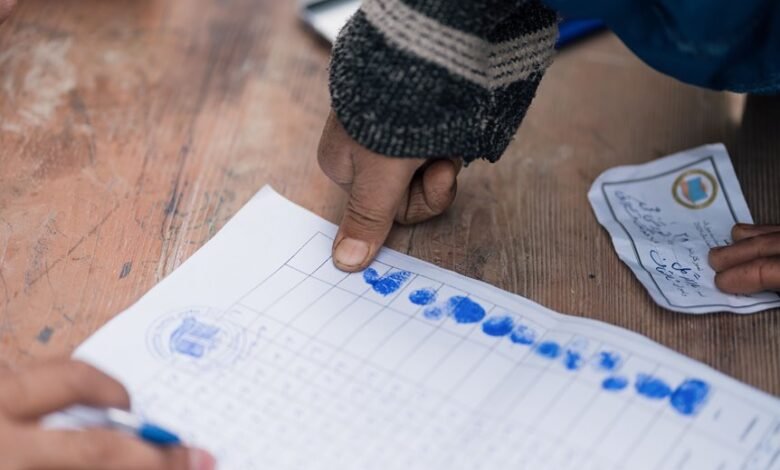
Reveal Registry Verification data for the five entries offers a concise, methodical lens on provenance and integrity. The discussion centers on data sources, reproducible methods, and cryptographic proofs that support traceability and accountability. Initial findings highlight consistency, potential anomalies, and the implications for timeliness. The framework invites scrutiny and independent replication, while outlining parameters that bound reliability. The topic remains open for rigorous evaluation, inviting stakeholders to examine how these results might influence governance and trust without compromising privacy.
What Reveal Registry Verification Is and Why It Matters
Reveal Registry Verification data refers to the process and criteria used to confirm the integrity and provenance of entries within the Reveal Registry. It is presented in a concise, detached analysis that emphasizes traceability, consistency, and accountability. The view highlights verification transparency, enabling stakeholders to assess reliability, reduce ambiguity, and sustain confidence while preserving the freedom to explore and verify independent results. Reveal registry.
How the Five Entries Were Verified: Data Sources, Methods, and Metrics
How were the five entries authenticated, and what data sources, methods, and metrics underpinned their verification? The evaluation integrated data sources from public registries and cross-checked cryptographic proofs, transaction logs, and audit trails.
Methods were standardized and reproducible, with metrics emphasizing accuracy, timeliness, and completeness. Findings anomalies were documented; transparency researchers organizers improve credibility and reliability through disciplined verification.
Key Findings, Anomalies, and What They Imply for Accuracy
The analysis identifies key findings, notable anomalies, and their implications for accuracy, presenting them in a structured, verification-focused manner. Discrepancy handling emerges as a critical process, guiding error delimitation and reconciliation. Provenance assessment clarifies data lineage, supporting traceability and confidence. Together, these elements define reliability boundaries, informing stakeholders about limitations and the robustness of the verification outcomes.
How Researchers and Organizers Use These Results to Improve Transparency
Researchers and organizers leverage the verification results to enhance transparency by systematically documenting data provenance, methodological choices, and decision thresholds. This practice supports independent replication, enables audit trails, and clarifies uncertainties. Disclosure practices emerge as standard routines, detailing data provenance, traceability, and rationale for parameter settings, thereby strengthening trust while respecting privacy and freedom to scrutinize methods and conclusions.
Frequently Asked Questions
Are There Privacy Concerns With Sharing These Verification Results?
Privacy concerns arise from revealing verification results, as data sharing can expose identifiers and provenance. The analysis emphasizes cautious disclosure, strict access controls, and verifiable provenance to support freedom while mitigating privacy risks and unintended correlations.
How Often Will These Entries Be Re-Verified?
The verification cadence remains predefined by policy, with entries re-verified on a scheduled interval. In detail, this ensures Data governance is upheld while preserving operational freedom, emphasizing meticulous, analytical verification that respects privacy and auditable cadence.
Do All Sources Have Equal Verification Weights?
No, all sources do not share equal verification weighting; data provenance varies. The analytical approach assesses provenance strength and corroboration, assigning differentiated verification weighting to each source, ensuring meticulous, verification-oriented conclusions while preserving audience freedom to question methods.
What Jurisdictions Govern the Data Usage Rights?
Jurisdictional authority over data usage rights lies with applicable data governance frameworks and privacy laws of each region, subject to data provenance, source weighting, and verification cadence; correction requests and privacy impact assessments influence governance, while cross-border transfers trigger additional compliance considerations.
Can Stakeholders Request Corrections to Verification Data?
Stakeholders may request corrections to verification data; however, verification processes require formal submissions, evidence, and auditable trails. Like a careful navigator, the process analyzes each claim, ensuring accuracy, transparency, and accountability within governance frameworks for data rights.
Conclusion
The verification process yields a precise, audit-ready portrait of each entry’s integrity, provenance, and reproducibility. Cross-validated cryptographic proofs, source-traceability, and transparent audit trails collectively establish reliability boundaries and highlight anomalies without compromising privacy. Like a well-tuned instrument, the framework reveals subtle discrepancies, guiding corrective actions. This meticulous, verification-oriented approach equips researchers and organizers with actionable insights to bolster transparency, accountability, and trust across the registry ecosystem.