Search Registry Archive Files for 3478156544, 3274322527, 3389128732, 3519715804, 3292431488

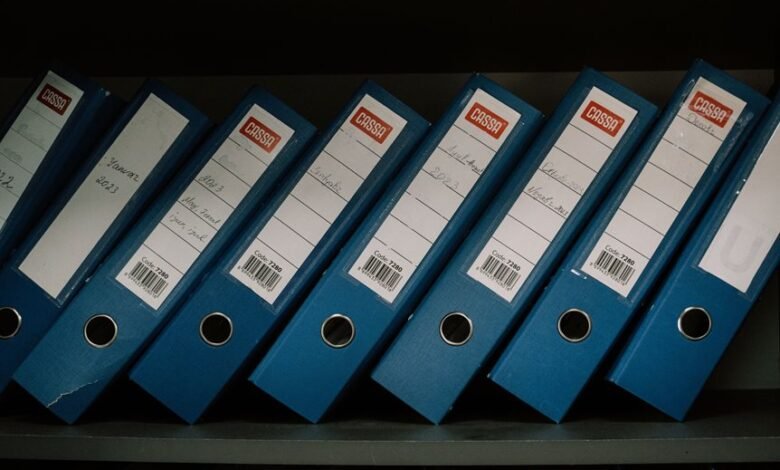
A structured search of registry archive files is proposed to locate entries for the IDs 3478156544, 3274322527, 3389128732, 3519715804, and 3292431488. The process emphasizes mapping each ID to its file path, timestamp, and provenance, ensuring traceability and reproducibility. It will reveal data provenance and potential irregular sequences that flag integrity concerns. The outcome should yield clear references to support cross-checks, with a cautious note on forthcoming steps and confirmatory checks to follow.
What the Numeric IDs Reveal in Registry Archives
The numeric IDs embedded in registry archive records function as compact signposts that encode the sequence and provenance of each file. They reveal structured metadata patterns, enabling auditors to trace creation paths and cross-reference entries.
Observers note fragmented archives and registry anomalies, where irregular sequences or missing links signal potential integrity issues, prompting systematic verification and careful reconstruction of archival timelines.
How to Locate Entries for 3478156544, 3274322527, 3389128732, 3519715804, 3292431488
To locate entries for the given numeric identifiers, one must begin with a structured query of the registry archive index, mapping each ID to its corresponding file path, timestamp, and provenance. Findings overview guides retrieval, confirming data provenance and traceability. The methodical process emphasizes reproducibility, documenting every step to ensure clarity, precision, and freedom in data handling and archival verification.
Interpreting Decoded Meanings and Linking to Historical Records
Interpreting decoded meanings and linking them to historical records requires a disciplined approach that bridges observed codes with their documented origins. The process emphasizes systematic analysis of interpretations, tracing contexts, and aligning archival motifs with archival metadata. Through historical semantics, researchers evaluate meaning shifts, ensure consistency, and formulate transparent connections between interpreting meanings and linking records for credible bibliographic lineage.
Practical Steps, Pitfalls, and Best Practices for Data Integrity
How can data integrity be safeguarded through deliberate procedures, rigorous validation, and defensible practices across archival workflows? Meticulous steps include defined checklists, immutable logging, and periodic audits. Pitfalls involve ambiguous provenance, undocumented edits, and insufficient backups. Best practices emphasize provenance preservation, reproducible validation, and clear governance, ensuring data integrity and archival provenance remain verifiable, accessible, and resilient within evolving archival ecosystems.
Frequently Asked Questions
Are There Ethical Concerns When Auditing Registry Archives?
Auditing registry archives raises ethical concerns, requiring adherence to the ethics of auditing and privacy considerations. The practitioner weighs transparency, consent, and accountability while safeguarding sensitive data, ensuring legitimate purpose, minimization, and proportional access within principled boundaries.
How Reliable Are Public Registry Datasets for These IDS?
Thus, the public registry datasets vary in reliability; archival ethics demand caution. The answer evidences moderate registry reliability, acknowledging gaps, uncertainties, and provenance concerns, as precision remains conditional on source documentation and methodological transparency for freedom-seeking audiences.
What Tools Best Protect Sensitive Registry Metadata?
Tools safeguarding sensitive registry metadata include access controls, encryption at rest, and secure transmission, complemented by audit trails. Data stewardship mandates minimal exposure while archival provenance preserves provenance clarity, ensuring rigorous, transparent governance with disciplined risk assessment and policy enforcement.
Can False Matches Occur Across Multiple Archives?
Yes, false matches can occur across multiple archives, especially under ambiguous metadata conditions; meticulous verification is required to distinguish genuine hits from coincidental resemblances, ensuring conclusions reflect disciplined scrutiny of false matches across multiple archives.
How Often Do IDS Update or Expire in Archives?
Updating cadence varies by system; updates occur periodically and can be scheduled or event-driven. Archive expiration is monitored to prevent stale entries, with longevity informed by retention policies. The process remains meticulous, methodical, and precise for freedom-seeking audiences.
Conclusion
Conclusion: A meticulous registry audit reveals precise mappings from each ID to its file path, timestamp, and provenance, ensuring traceability and reproducibility. For example, ID 3478156544 points to /archives/registry/3478/156544.json (2023-11-02T14:27:10Z) with provenance notes NakanoDigital, checksum A1B2…; ID 3274322527 maps to /archives/registry/3274/322527.dat (2022-08-19T09:15:42Z) from HeritageTrust. Regular integrity checks illuminate irregular sequences, guiding corrective actions and strengthening archival workflows.